Ice. Ice sits on the desktop as a small character you can move. Talk to it and it works across the browser, files and apps, leaving a trail of every step: what it opened, what it wrote, what failed and how long it took. The macOS beta comes first, Windows next.
Divyansh Shukla
AI engineer building agents, automation and the products around them
NARA, Nara Virtual Private Limited · India
3 October 2026
- task“Summarise this page for a hiring manager.”
- plan5 steps, written once · 0 tokens
- ground✓
- ground✓
- ground✓
- ground✓
- ground✓
- verify5 of 5 grounded · 0 replans
- answer
- Divyansh Shukla is an AI engineer in India who builds and ships AI products.
- Most of the products ship under NARA (Nara Virtual Private Limited).
- Sole author of Plan Once, Ground Locally (2026), a preprint on plan-and-execute web agents.
- Open to AI engineering roles, and to conversations with investors and partners about these products. Based in India; remote works.
- Email [email protected]; LinkedIn and GitHub are linked beside it.
Abstract
I build AI products end to end and ship them. This year that meant Ice, a desktop assistant that does the work in your apps; Blank, a website builder that hands back real code; Synapse, a chatbot that answers a site’s visitors; and CampusQuiz, which turns class notes into a live quiz. Underneath them is research: in Plan Once, Ground Locally [3], I show that a web agent which writes its whole plan in one LLM call, then grounds each step with a small on-device model, matches a budget-matched ReAct baseline on success while using 83.6% fewer input tokens. Most of the products ship under NARA [4]. This page is written for agents as well as people: it serves an MCP endpoint, an llms.txt and a markdown copy of every page (§4).
* Open to AI engineering roles, and to conversations with investors and partners about these products. Based in India; remote works. Correspondence: [email protected].
1Selected work
Six products I built and shipped in 2026, each live or in public beta. Everything else, from open-source tools to client sites, follows in Table 1, and every project has a fuller entry on the work page.
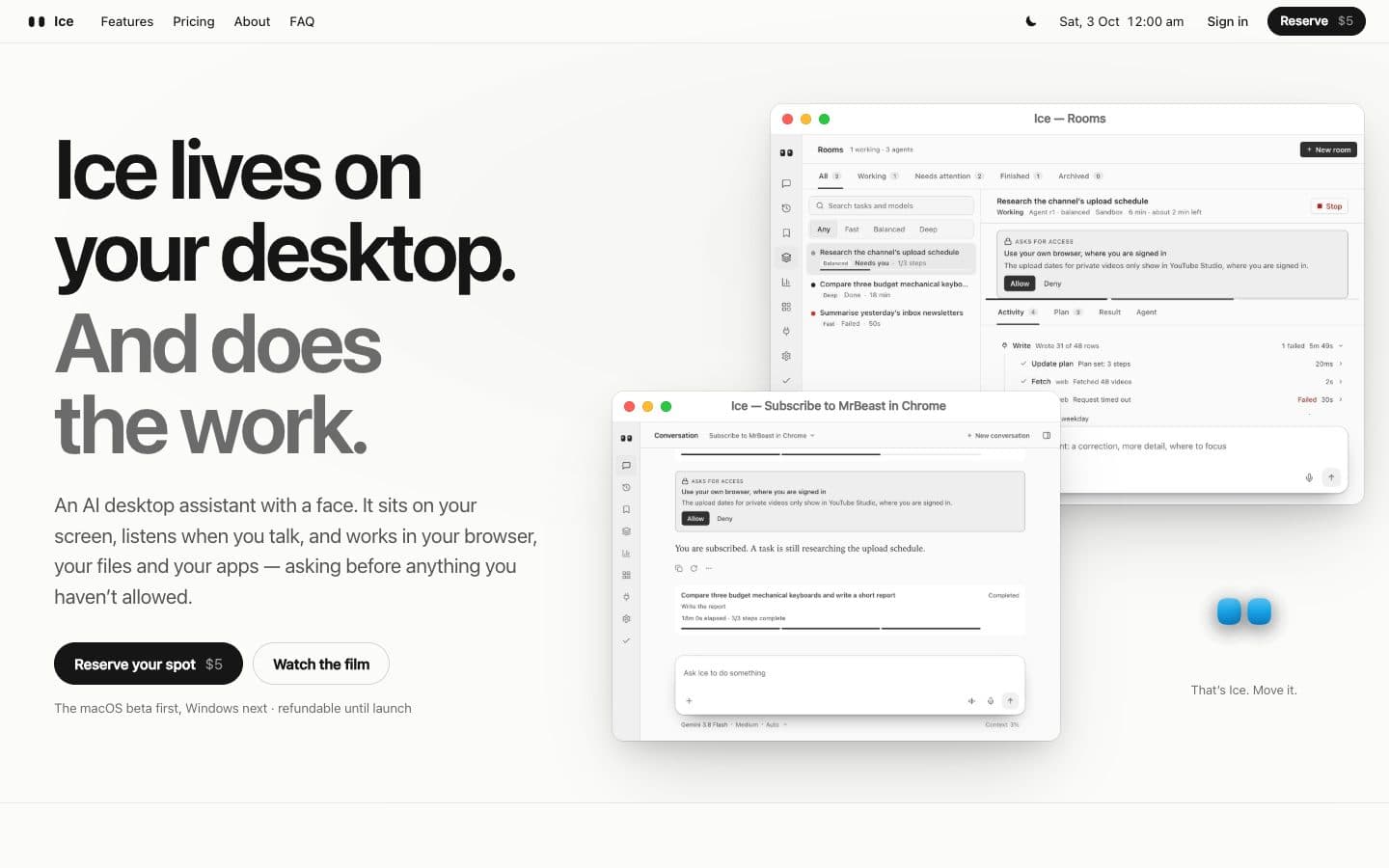
(a) Ice · ice.naravirtual.aiBeta · $5 reservations
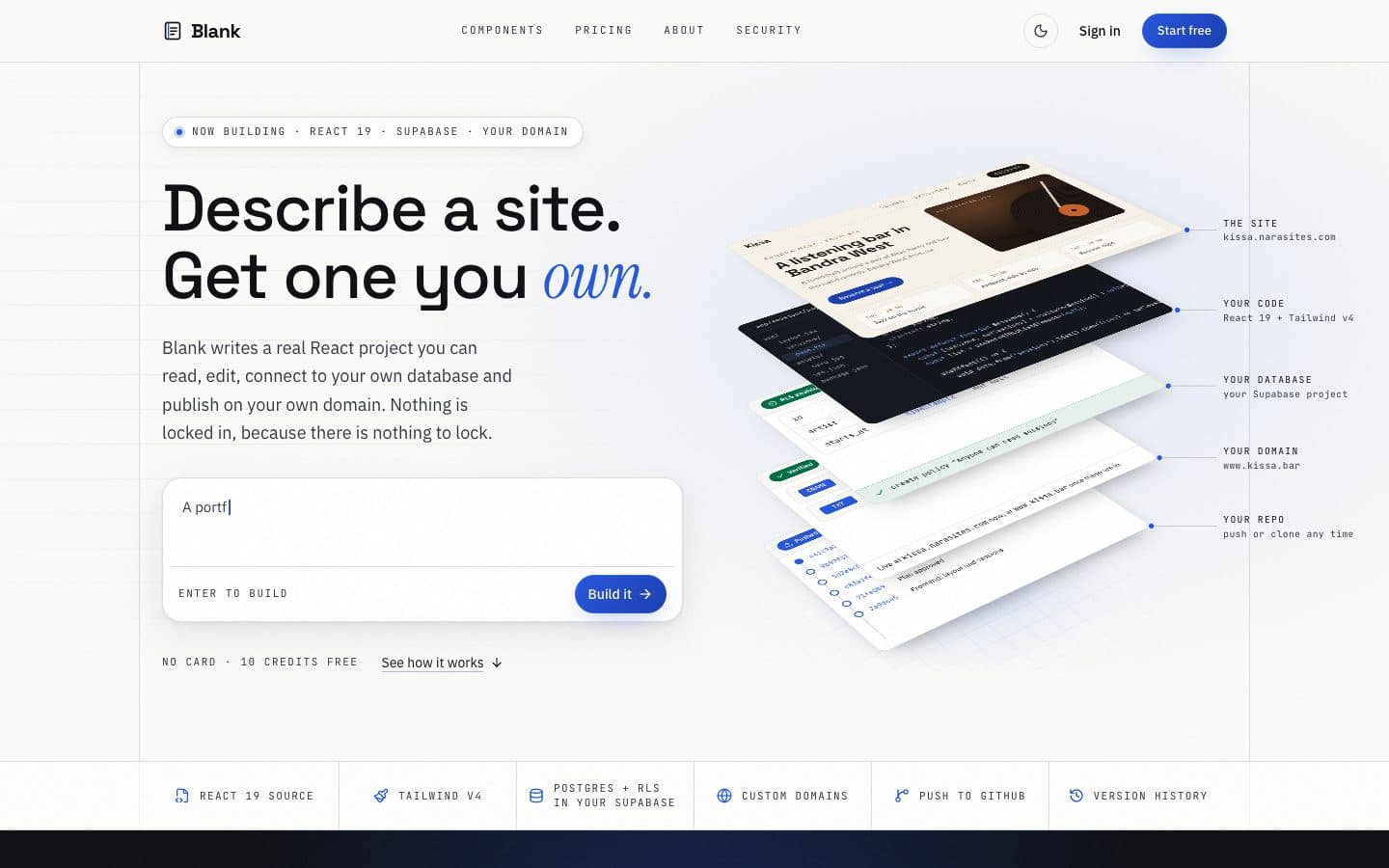
(b) Blank · nvblank.comLive · free to start
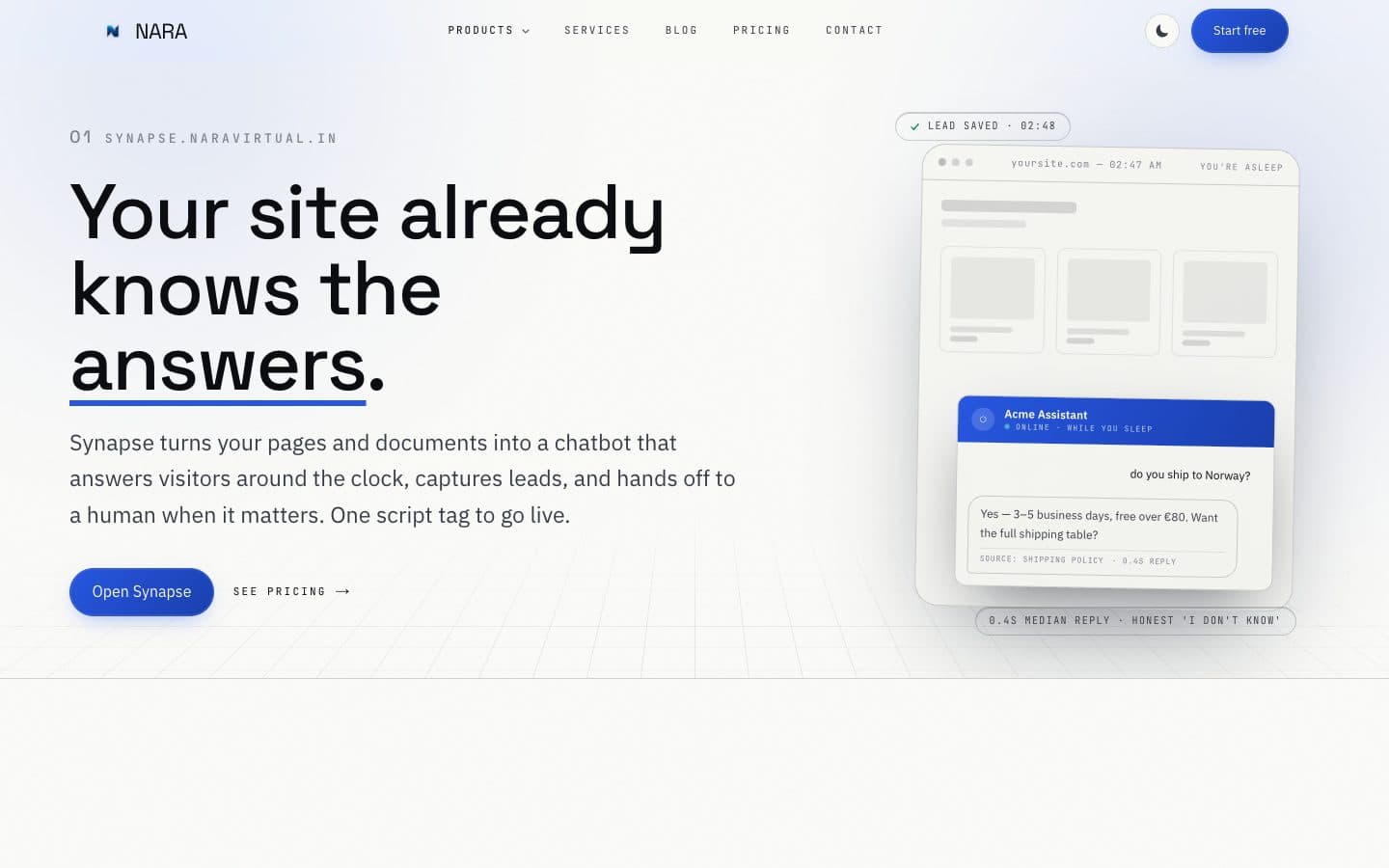
(c) Synapse · naravirtual.ai/synapseLive · free plan
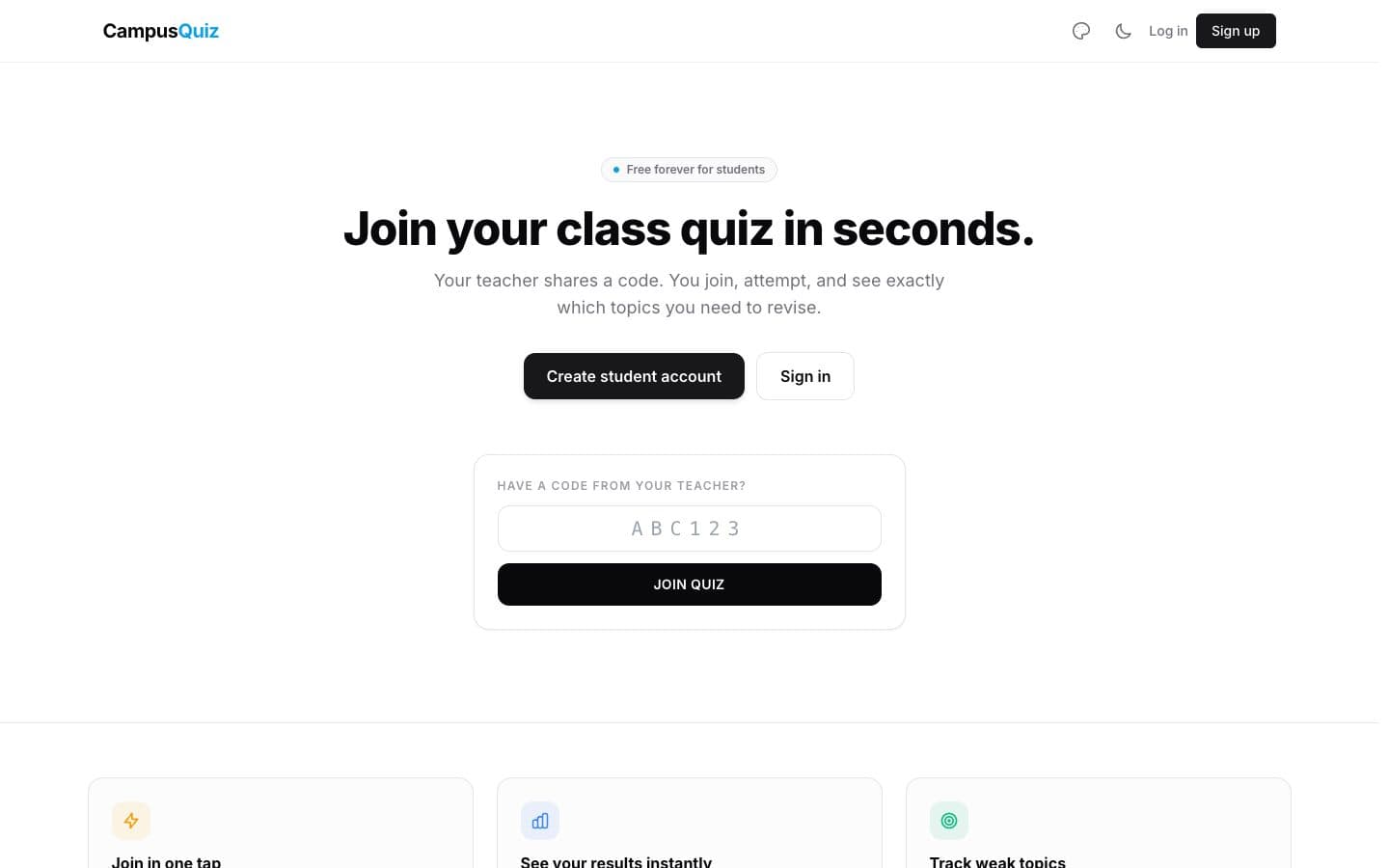
(d) CampusQuiz · campusquiz.inLive · free for students
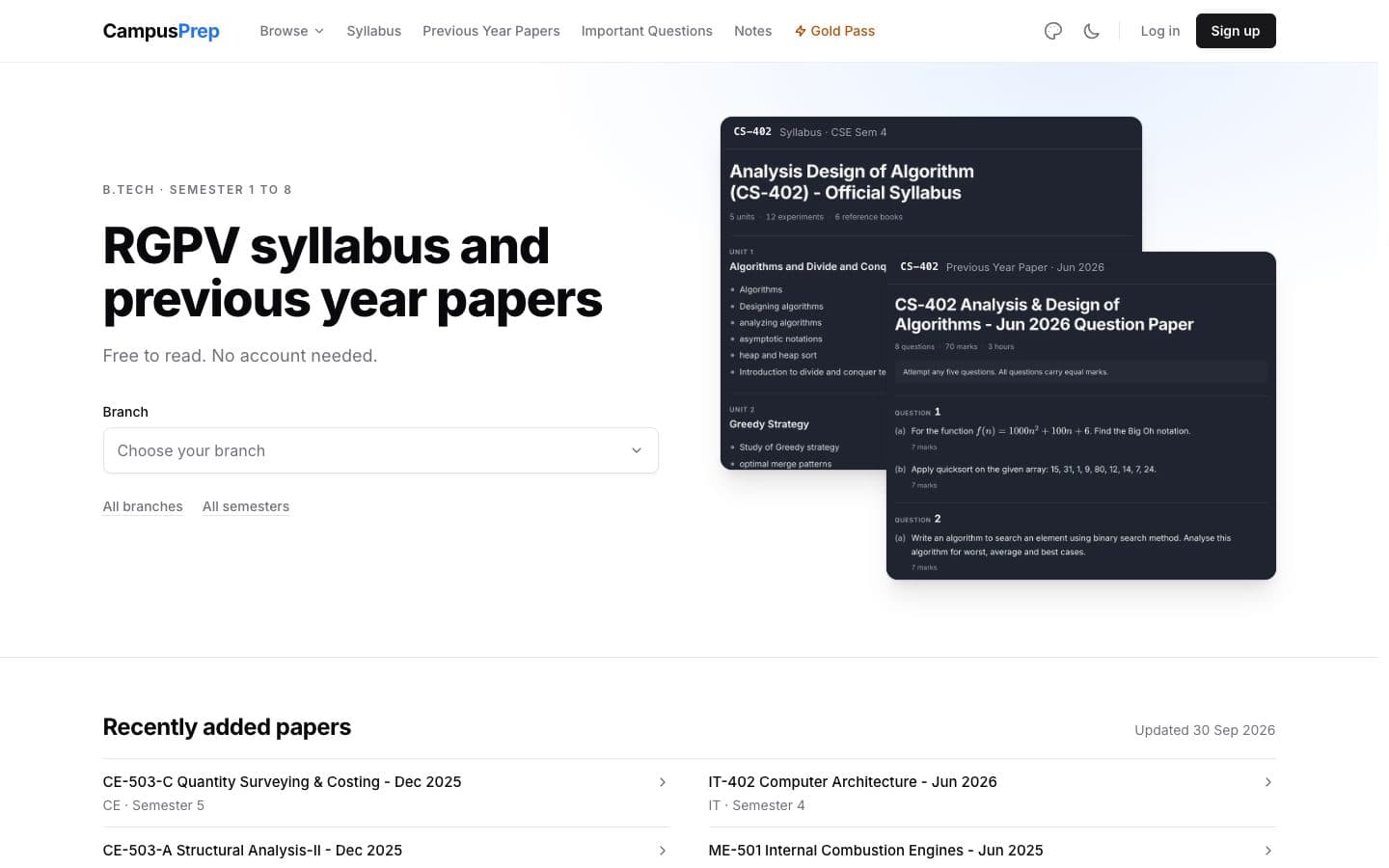
(e) CampusPrep.in · campusprep.inLive · free
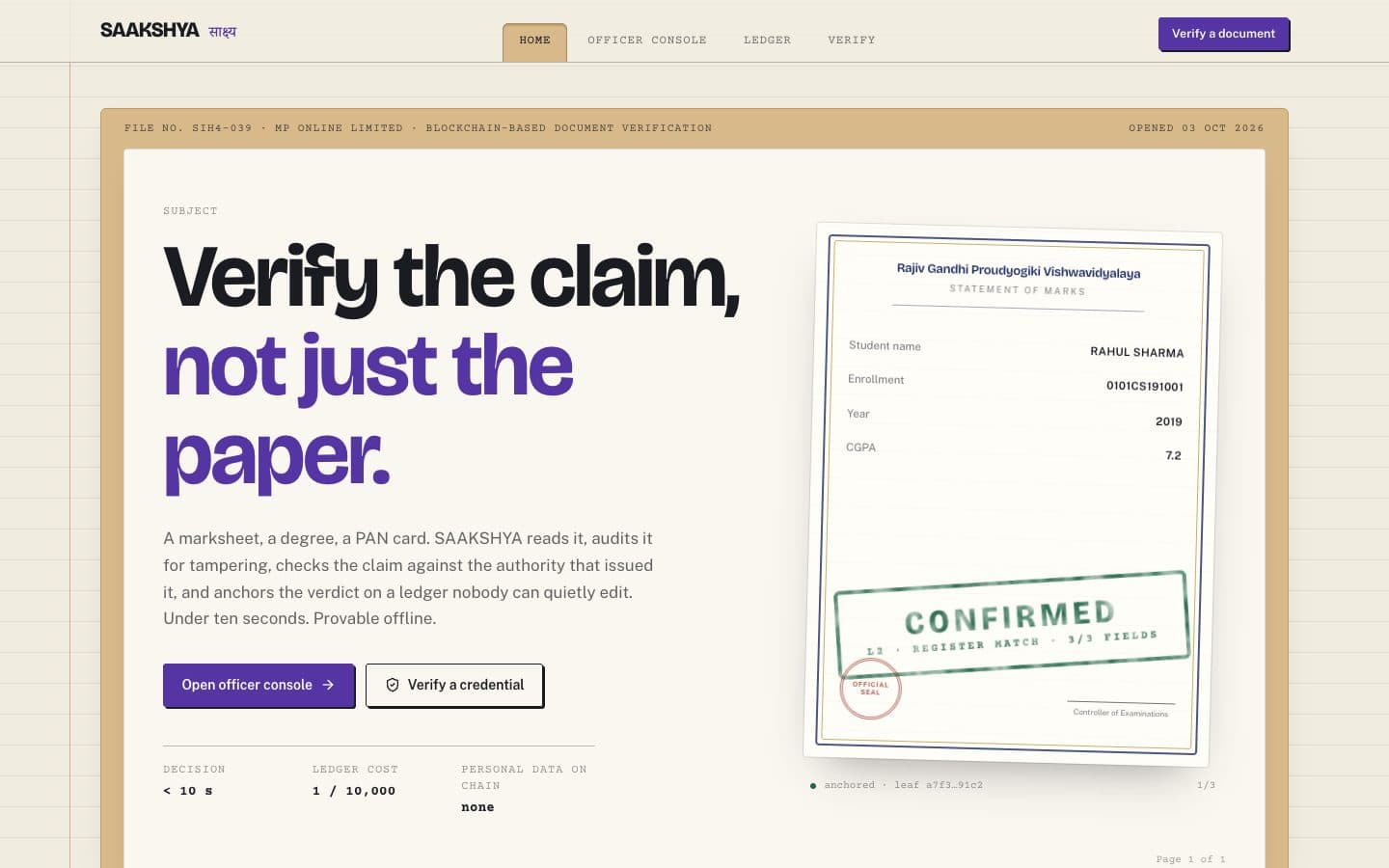
(f) Saakshya · saakshya.divyanshshukla.comLive demo
Blank. Describe a site and Blank writes a real React project you can read, edit, connect to your own database and publish on your own domain. Nothing is locked in, because there is nothing to lock: the code, the data and the repository are yours from the first build.
Synapse. Synapse trains on a site’s own content, answers customers at any hour, collects leads and passes the conversation to a human when it should. The free plan covers 250 messages a month without a card.
CampusQuiz. A teacher uploads notes, a PDF or a photo of the board, and CampusQuiz drafts the quiz: multiple choice, true or false, or mixed. Students join with a six-character code, with nothing to install, attempt it live, and see their score and the explanations the moment they submit.
CampusPrep.in. A study site for RGPV B.Tech students: pick a branch and semester to get the official syllabus, solved and unsolved previous-year papers, short notes and important questions, with nothing behind a sign-up wall.
Saakshya. Built with Team Saakshya at the SISTec Innovation Hackathon 2026, for a problem statement on blockchain-based document verification. Upload a marksheet, a degree or a PAN card: Saakshya reads and audits it, checks the claim against the issuing authority’s register, anchors a salted hash in a Merkle-batched ledger and returns a signed credential with a QR code that verifies offline.
Table 1: Everything else: products, open source, client sites and earlier work. Private and client projects link to the live site only.
| Project | Kind | Year | What it is |
|---|---|---|---|
| Conference | Product | 2026 | Browser video meetings for up to 1,000 people and webinars to 5,000, with cloud recording, scheduling and self-serve billing. |
| Loci | Product | 2026 | Speed reading meets the method of loci: RSVP reading, AI-generated memory-palace imagery for each paragraph, and quizzes that check what stuck. |
| NARA | Product | 2026 | The focused software house behind Ice, Blank, Synapse, Conference and Loci, which also builds websites, chatbots and automation for clients. |
| SkinDost | Product | 2026 | Online dermatology for India: a skin scan and report, video consultations with certified dermatologists, digital prescriptions and medicine delivery. |
| atlas-mcp | Open source | 2026 | An MCP server and CLI that connects coding agents to a team knowledge hub: agents pull approved prompts, docs and scoped secrets, and their work is captured. |
| claude-code-motivator | Open source | 2026 | A plain-text directive API for autonomous coding agents: polled before the agent stops, it returns one precise instruction to find, verify and ship the next task. |
| The Shining 32 Dental Clinic | Client | 2026 | Website for a two-clinic dental practice in Indore, with an admin CMS so the clinic edits its own pages. |
| Café Latté | Client | 2026 | Website and table-side app for a lakeside café and patisserie at Noor-Us-Sabah Palace, Bhopal: menu, seating, directions, installable and usable offline. |
| Aawaz Academy of Music | Client | 2026 | Website, member area and staff console for a music school in Navlakha, Indore. |
| WPA2 handshake research | Earlier | 2025 | Wireless security research: capture a WPA2 handshake and crack it offline to show why weak passphrases fail. For networks you own or may test. |
| JARVIS | Earlier | 2024 | A voice-controlled assistant inspired by Iron Man’s: speech recognition, spoken replies and control of the computer. |
| Gesture control | Earlier | 2024 | A computer-vision virtual mouse: move the cursor and drive media apps with hand gestures tracked in real time. |
| SCANCROS | Archived | 2024–25 | A toolkit for bug-bounty hunters that automated vulnerability-scanning pipelines. The site is retired. |
2Research
Plan Once, Ground Locally: Plan-and-Execute Web Agents Match ReAct Accuracy at One-Sixth of the Token Cost. Divyansh Shukla. Preprint, Zenodo, 23 September 2026. doi:10.5281/zenodo.22904595.
LLM web agents usually follow the ReAct pattern: the model is called again after every browser action, so each click is paid for with a network round trip and with a prompt that has grown since the last one. We study the alternative in which the model writes the whole plan in one call and the steps are executed locally, with a small on-device decision model (Laya, a ModernBERT-large “System-1” model used zero-shot) mapping each step to a page element, judging when asynchronous content has arrived, and checking actions that left the page unchanged.
Against the budget-matched baseline, planning once is not significantly different on success (88.8% vs 92.0%; paired difference −3.2 points, 95% CI −7.7 to +1.2) while using 83.6% fewer input tokens, 67.3% fewer LLM calls and 80.4% less money, and finishing 4.1× faster.
Table 2: 200 tasks on seven public websites, three repeats per configuration, DeepSeek v4.1 flash at temperature 0. Success is the pooled rate with its 95% interval; the other columns are means per task. Best in bold.
| Configuration | Success | Time | LLM calls | Input tokens | Cost |
|---|---|---|---|---|---|
| ReAct4,000-char extract, 15 turns | 80.7%77.3–83.6 | 32.8 s | 6.03 | 20,523 | $0.00186 |
| ReAct, budget-matched12k-char extract, 30 turns | 92.0%89.6–93.9 | 42.2 s | 6.22 | 24,697 | $0.00202 |
| Plan + Layaone plan, grounded on device | 88.8%86.1–91.1 | 10.2 s | 2.03 | 4,060 | $0.00040 |
| Plan + word overlapablation: no Laya | 86.5%83.5–89.0 | 10.8 s | 2.12 | 4,305 | $0.00042 |
@misc{shukla2026planonce,
  title     = {Plan Once, Ground Locally: Plan-and-Execute Web Agents
               Match ReAct Accuracy at One-Sixth of the Token Cost},
  author    = {Shukla, Divyansh},
  year      = {2026},
  month     = sep,
  publisher = {Zenodo},
  doi       = {10.5281/zenodo.22904595},
  url       = {https://doi.org/10.5281/zenodo.22904595},
  note      = {Preprint}
}3Notes
Short working papers, with the numbers behind them. New ones arrive on the notes page and by RSS.
- What 2,800 browser-agent runs taught me about planning. Plan-and-execute web agents matched a budget-matched ReAct baseline on 200 tasks with 83.6% fewer input tokens. What held up, what didn’t, and what to copy.
- Making my site readable by agents. This site serves an MCP server, WebMCP tools, llms.txt and a markdown copy of every page, all from one content source. What each piece does and how to try it.
4Reading this site with an agent
Every page here has machine-readable twins, generated from the same source as the HTML, so the versions never disagree. There are three ways in.
MCP. A read-only server over Streamable HTTP at /mcp. To add it to Claude Code:
claude mcp add --transport http divyansh https://divyanshshukla.com/mcpCursor, VS Code and other clients take the URL https://divyanshshukla.com/mcp directly; stdio-only clients can bridge with mcp-remote. Table 3 lists the tools.
Table 3: Tools served at /mcp. All are read-only.
| Tool | Arguments | Returns |
|---|---|---|
| about | none | Who Divyansh Shukla is: role, status, contact links and the abstract of this site. Call this first. |
| list_work | kind?: Research | Product | Hackathon | Open source | Client | Earlier | Archived | Every project with its kind, year, one-line summary and link. Optionally filtered by kind. |
| get_work | slug: string | Full description of one project: what it does, highlights, stack where public, and links. |
| get_paper | none | The preprint Plan Once, Ground Locally: abstract, results table, findings, links and BibTeX. |
| search | query: string | Keyword search across every page and project on divyanshshukla.com. Returns the best matches with links. |
| contact | none | How to reach Divyansh: email, LinkedIn and GitHub, plus current availability. |
WebMCP. Agents running inside your browser get the same tools on this page, registered through WebMCP, with no setup.
Markdown and llms.txt. Append .md to any URL, or send Accept: text/markdown. /llms.txt maps the site and /llms-full.txt is all of it in one file.
curl -H "Accept: text/markdown" https://divyanshshukla.com/5Background
B.Tech, Computer Science (AI & Data Science). Earlier projects, a voice assistant, a gesture-controlled mouse, wireless-security research and a bug-bounty toolkit, are in Table 1. The tools I reach for:
- Languages
- Python, TypeScript, JavaScript, SQL
- Agents and LLMs
- Anthropic and OpenAI APIs, OpenRouter, MCP, Playwright, LangChain, RAG with ChromaDB and Pinecone
- Models on device
- MLX, ModernBERT, MediaPipe, OpenCV
- Web
- SvelteKit, Next.js, FastAPI, Django, Tailwind CSS
- Data and infrastructure
- Postgres, Redis, Docker, Dokploy, Vercel, Cloudflare
- Security and hardware
- Aircrack-ng, Hashcat, ESP32, Raspberry Pi
6Correspondence
Open to AI engineering roles, and to conversations with investors and partners about these products. Based in India; remote works. I usually reply within a day.
References
- [1]Divyansh Shukla. GitHub profile, TheDivyanshShukla.github.com/TheDivyanshShukla
- [2]Divyansh Shukla. LinkedIn profile.www.linkedin.com/in/thedivyanshshukla
- [3]D. Shukla. Plan Once, Ground Locally: Plan-and-Execute Web Agents Match ReAct Accuracy at One-Sixth of the Token Cost. Preprint, Zenodo, 2026. doi:10.5281/zenodo.22904595.doi.org/10.5281/zenodo.22904595
- [4]NARA, the focused software house. naravirtual.ai.naravirtual.ai
- [5]Saakshya: verify the claim, not just the paper. Live system.saakshya.divyanshshukla.com
- [6]Ice: the AI desktop assistant that does the work. ice.naravirtual.ai.ice.naravirtual.ai
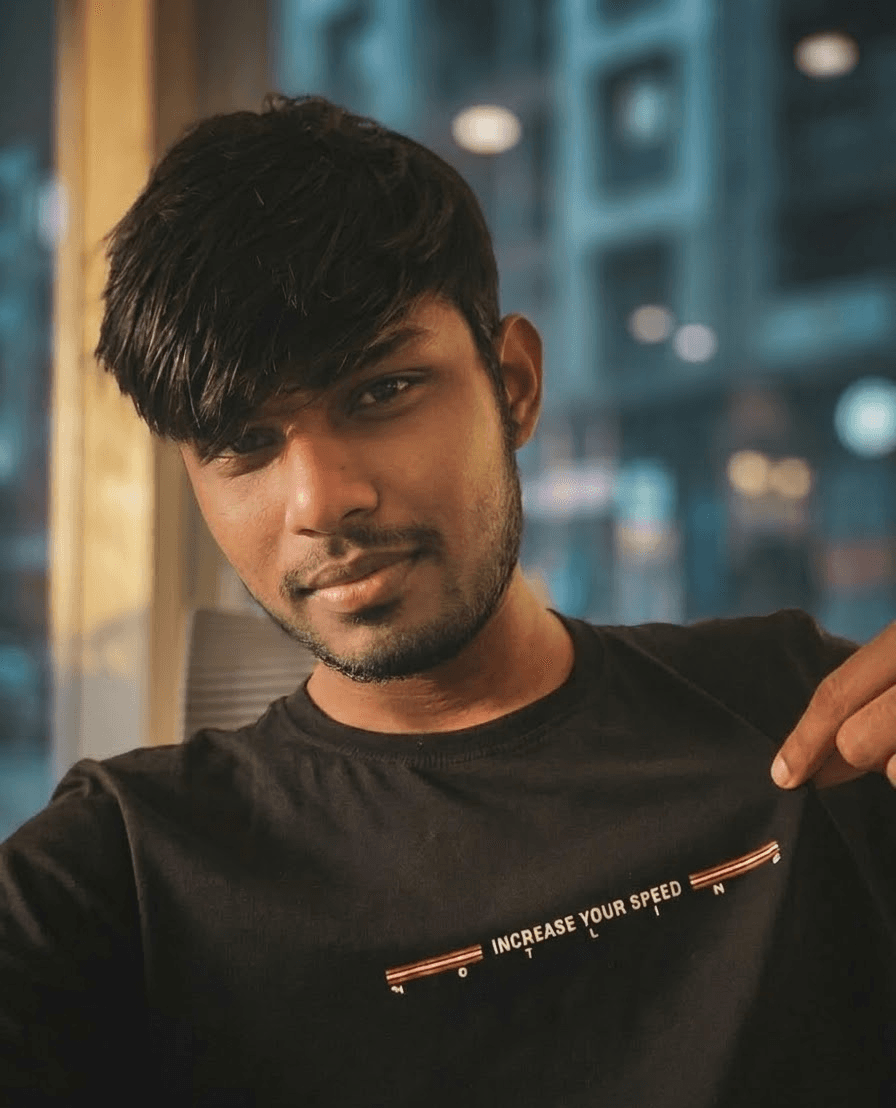
Divyansh Shukla is an AI engineer in India who builds and ships AI products: Ice, Blank, Synapse, Conference and Loci at NARA; CampusQuiz and CampusPrep.in for students and teachers; and Saakshya, an AI and blockchain document-verification system built at the SISTec Innovation Hackathon 2026. Author of Plan Once, Ground Locally (2026). Research interests: planning and grounding for web agents, inference cost, on-device decision models, and agent tooling such as MCP.